
Long Island old map
You can find on this page the Long Island old map to print and to download in PDF. The Long Island historical map and the vintage map of Long Island present the past and evolutions of the city of Long Island in New York - USA.
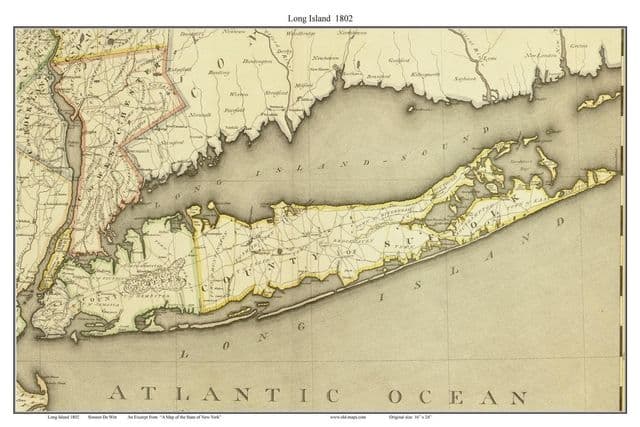
Long Island historical map
The Long Island old map shows evolutions of Long Island city. This historical map of Long Island will allow you to travel in the past and in the history of Long Island in New York - USA. The Long Island ancient map is downloadable in PDF, printable and free.
In the 19th century, Long Island was still mainly rural and agricultural. Suburbanization started modestly on Long Island when reliable steam ferry service allowed prosperous Wall Streeters to get to new Brooklyn Heights homes in time for dinner. Rural traffic was served by the new Brooklyn and Jamaica Plank road through Jamaica Pass, among others. After the American Civil War, streetcar suburbs sprawled out onto the outwash plain of central and southern Kings County as its mentioned in Long Island historical map. Trolleys also brought workers from other parts of western Queens to Long Island City jobs. The Long Island Rail Road was begun as a combined ferry-rail route to Boston via Greenport. The growing and merging railroads opened up more than 50 stations in (present-day) Nassau County and over 40 in Suffolk Country, laying the foundation for the future suburbanization of the island.
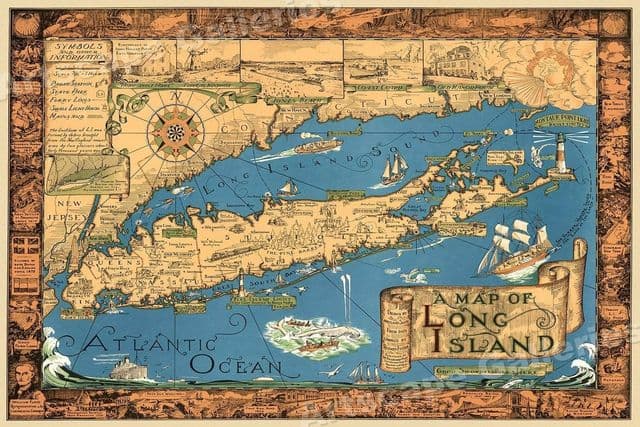
Long Island vintage map
The Long Island vintage map give a unique insight into the history and evolution of Long Island city. This vintage map of Long Island with its antique style will allow you to travel in the past of Long Island in New York - USA. The Long Island vintage map is downloadable in PDF, printable and free.
At the time of European contact, the Lenape people (named the Delaware by Europeans) inhabited the western end of the Island, and spoke the Munsee dialect of the Algonquian language family. Giovanni da Verrazzano was the first European to record an encounter with these people when he entered what is now New York Bay in 1524. The eastern portion of the island was inhabited by speakers of the Mohegan-Montauk-Narragansett language group of the same linguistic family as its mentioned in Long Island vintage map, representing their ties to the aboriginal peoples inhabiting what is now Connecticut and Rhode Island. The area was central to the production of Wampum, providing the resources necessary for its creation.